The “upright” march on
December 27, 2019
I didn’t identify as disabled before I came to Yale. I saw myself as someone who happened to live in…

Manu Bosteels ’28 writes that Yale students should prefer to enroll their future children in the public school system, rather than ship them off to an exclusive private institution.
His argument proceeds along two lines: first, there are tangible benefits derived from attending public school, and second, some good would arise from parents’ increased engagement in their communities’ shared institutions.
Surely there is some reason in both of these points — but I suspect that Mr. Bosteels’ conclusion is still in error. Perhaps he’s right that given “a choice between comparable public and private schools,” you would be well-advised to send your kid into the public system. But I would urge you to instead consider opting out of this dichotomy altogether. Don’t subject your children to any kind of institutionalized education — homeschool them instead.
Let me explain why.
I, like Mr. Bosteels, am a product of the public school system. My high school experience involved as much socioeconomic diversity as one could reasonably expect from southeast Michigan; and I attended several school board meetings — to criticize what I saw as misguided board priorities, and to advocate for my school when we were facing a major budget shortfall.
But I can’t say much good came as a result! All my comments disappeared into the bureaucratic ether — my school laid off teachers to make up its deficit, and my and my classmates’ education suffered.
Further, while I happily consider myself a polished and worldly cosmopolitan today, the research is mixed on whether my majority-minority schooling environment had anything at all to do with it.
Interestingly, regardless of whether a more-diverse school is better for socioemotional development than a less-diverse one, the evidence overwhelmingly favors homeschooled students’ social skills over conventional students’ in general — a result which holds from the age of 6, through high school and college, and even into adulthood. The common portrayal of a homeschooled student as a socially stunted loner appears to be mostly mythical.
Less surprising, though just as consequential, is the fact that homeschooled students tend to outperform conventional students academically as well. This remains true even when we control for family income and parental education levels.
Some parents take this overperformance to an extreme — consider economist Bryan Caplan, who homeschooled his incredibly gifted sons from the seventh grade on: They prepared for AP exams and audited Caplan’s own undergraduate economics courses in middle school, became fluent in Spanish, and began producing novel history papers in high school. Each was offered and accepted a full merit scholarship to Vanderbilt University.
The principle generalizes: Neuroscientist and writer Erik Hoel has suggested that many of the greatest minds of the late Enlightenment era — people like John Stuart Mill, Bertrand Russell, and even Albert Einstein — were the product of what he calls “aristocratic tutoring.” A time-intensive process in which dedicated governesses and personal instructors nurtured the young geniuses’ curiosities, and developed their capabilities to the maximum.
Of course, it’s unlikely you’ll be able to dedicate such vast resources to your own children’s education. Fear not, though: Even incredibly low-effort, open-ended, non-curricular homeschooling — sometimes called “unschooling” — appears to be pretty non-detrimental to children’s academic prospects. In one study, where effortfully-homeschooled students performed between one and three grade levels higher than their conventionally-educated counterparts, unschooled students trailed less than one grade level behind.
In other words, research suggests that the worst-case scenario for simply opting your kids out of school — and then doing nothing more to assist their educational development — will have them acting like an 11th grader among 12th graders. A nearly indistinguishable difference!
Perhaps the most conclusive argument for the merits of homeschooling — or unschooling — isn’t based on social science or the history of genius, but on the simple fact that school sucks. We feel this on a bone-deep level: that snow days are the best, that it’s downright impossible to get anything done in the week before a break.
Broadly speaking, kids hate going to school — sometimes for good reason: they’re bullied, or abused, or confronted with bizarre and bewildering content, from wacky Common Core math to the latest in hyper-academic critical theory. But sometimes it’s just because the days are long and boring. School is no fun at all.
Of course, we usually ignore complaints like these from children. “I know it can be boring,” we say, “but it’s for your own good!”
But is it for their own good? If homeschooled students excel academically and socially, and to keep your kid on-track with grade-level expectations isn’t any more time-intensive than attendance at PTA meetings, then why on earth would we still force our children into institutionalized education? Why risk the bullying, the abuse, the nonsense and the boredom?
Don’t send your kids to school. They’ll grow up to be smarter, more socially conscious, and certainly more thankful adults if you keep them home instead.
Ari Shtein is a first-year at Yale University. This article was originally published in the Yale Daily News and is posted here with permission from Ari Shtein.
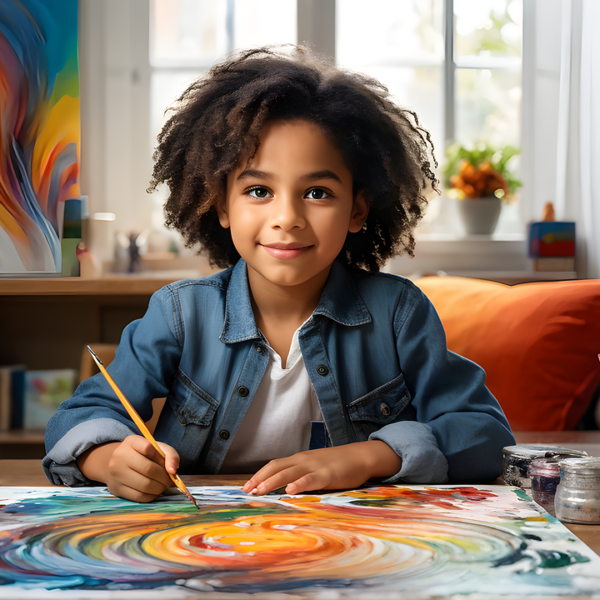
Like most of the pictures on TeensParentsTeachers, the picture posted with this article is courtesy of a free download from Pixabay.com.